Visie & Missie    De noodzaak van ons werk    Over de Vrolijkheid    Organisatie    Financieel    Vrolijke Vrienden    FAQ    Downloads
   Over de Vrolijkheid
About De Vrolijkheid: summary in English

Nationale Stichting ter Bevordering van Vrolijkheid

The National Foundation for the Promotion of Happiness (abbreviated “the Happiness”) is a multicultural, not-for-profit network of artists, play writers, actors, musicians and volunteers who invest in children and teenagers in asylum-seeking centres. The Happiness organises creative activities on a regular basis in 30 asylum-seeking centres in the Netherlands. Creativity provides space. Art challenges, but doesn’t force. For children and teenagers it is of great importance to be able to demonstrate during their development who they are and who they can be. This can be done through music, sculpture, theatre, play and game, in brief, during creative activities.

Our target group was, and still is a blind spot for public and private institutions both in terms of refugee-policies and in terms of working for asylum-seekers or children and teenagers. While the children and teenagers of the Happiness are mentioned in the International Covenant for the Rights of Children, they do not ‘fit’ into any mandate of the Dutch government. The Happiness has a unique role through the diversity of its flexible regional network; a large amount of the projects are executed by employees with a refugee background. The Happiness is an independent organisation supported by individuals and private funding.

Mission and vision

We are talking about children who are victims of armed conflicts, torture, neglect, abuse or exploitation. They have the right to receive special care. ‘Such recovery and reintegration shall take place in an environment which fosters the health, self-respect and dignity of the child” (article 39 of the Convention on the Rights of the Child)


The Happiness provides attention and ensures activities for children who are stuck in the no-man’s land of asylum-seeking procedures.The resilience of children inspires us. We need to invest in that and dare others to do so as well.

The Happiness is involved and professional, we develop concepts, projects and activities to brighten the lives of children and support everyone who wants to participate.

We want to realise activities in all asylum-seeking centres for children and teenagers. Creativity and art are instruments that we can give them; which they can use to share and shape their story, which gives them self-confidence and develops their talents, and of course, which allows them to be burden free for a moment.<

The Happiness provides opportunities for society. Special art projects, meetings with companies, expositions, entertainment, and a website for and by kids for example, allow for surprising encounters.

What we do

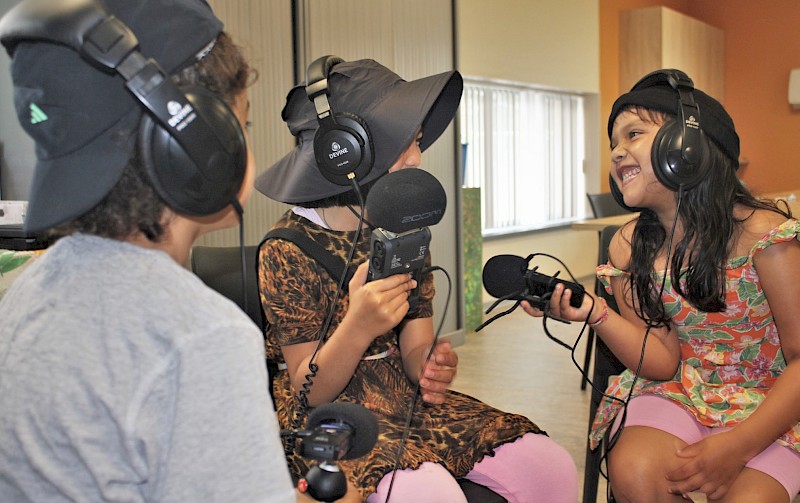
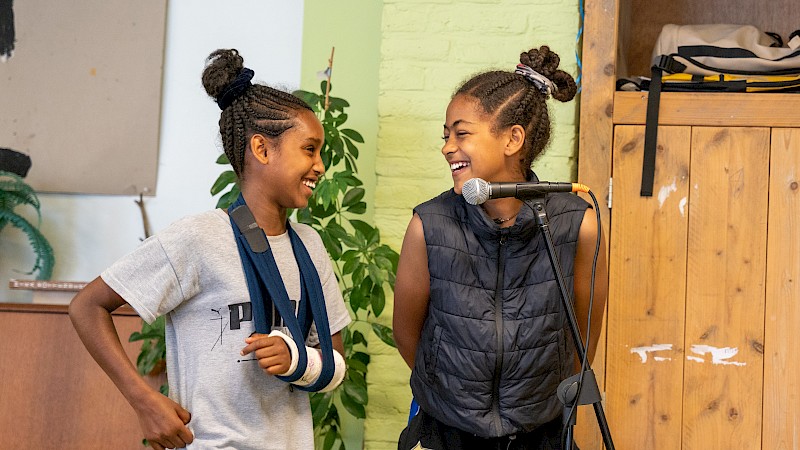
The Happiness has been present in asylum-seeking centres since 2000. We work with children in different age groups, who receive weekly workshops. With the children and teenagers we make theatre-plays, movies, music and art. It is about creating value, something for the children to express their feelings, dreams, ideas and stories. Something that has value and fosters dignity.

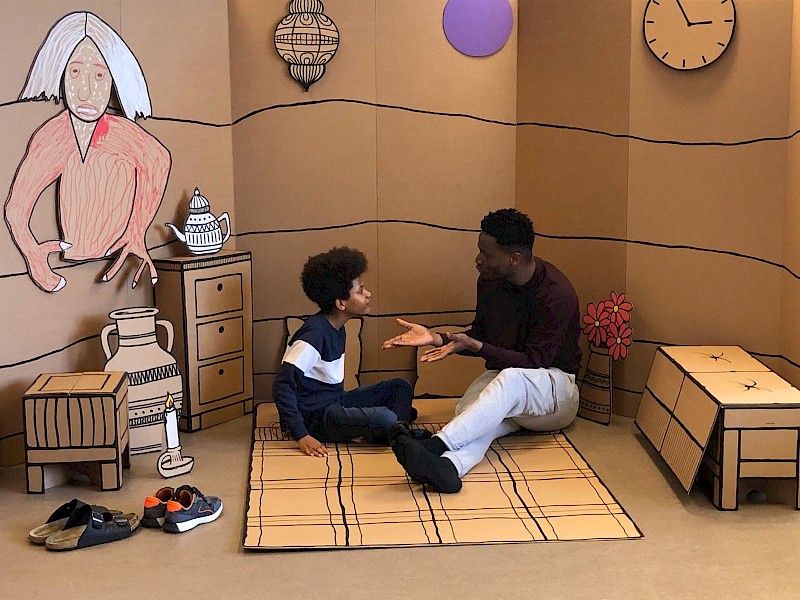
We travel around with our story-tent in which parents and children tell stories and write about their lives. We make short films and animation, and have a ‘happy-house’ in which children tell their secrets to a camera. We have a photo project in which the World is captured from different perspectives. We build dream-houses and castles, make art-dioramas through which you can look to see the childrens’ dreams of the future. We make powerful and surprising theatre-plays with teenagers and put scarecrows in the neighbourhoods of the asylum-seeking centres to scare away people who want to steal or ruin our dreams.

In conclusion

Some structural aspects of the situation of the Young asylum-seekers cannot be changed by the Happiness; the insecurity of the asylum-seeking procedure, the housing, or the memories of the past. The Happiness therefore focuses on strengthening their resilience; an attribute to support the children to stabilise their step in to the future. The Happiness offers these children and youth the possibility to temporarily escape the misery that life in an asylum-seeking centre can cause. Their own place, where they can encounter beautiful moments, develop their talent and enjoy themselves. This, with guidance from people who accept them, who will listen to them and want to give their dream a chance.


Offer of the Happiness to other organisations in Europe

With the support of, among others, the European Refugee Fund, the Happiness has developed experience over the past ten years and many example projects and trainings which have strengthened the coping mechanisms for children who have fled to Europe with or without parents.

The Happiness is a Dutch network organisation consisting of former refugees and other Dutch people. You can always contact us. We want and can deliver, in exchange for compensation of overhead costs:

  1. Translate our methodologies or project examples in your language(s)

  2. Cooperate with a local partner to research if our project methodologies would suit your situation

  3. Training of trainers and the organisation of inception phases at your preferred location

  4. Provide advice and coaching 
We think it is important that the abundance of information, knowledge and practical experience that we have can be developed and used to support as many refugee children in Europe as possible.


The 5 Principles of the Happiness

Content methodology

he Happiness works with content methodology from a central point of interest; to offer positive action in the structural surroundings of the child, to allow a child to be a child, and to express themselves non-verbally. This is about offering children the opportunity to develop healthily from their own strength. In this manner we are working on prevention.

The Happiness maintains five principles. On the basis of these principles we develop and evaluate programmes. Research has shown that these five principles are in line with the needs of the children and teenagers in asylum-seeking centres. We don’t ‘help’ but provide opportunities and chances. The instruments we offer with art and creativity are ‘keys’. The children and youth ‘open the door’ themselves. The five principles are central in the developing and evaluating of each activity.

1. The environment and atmosphere is light and goals are modest. We try to create positive experiences which connect to the child’s perspective of the world.

2. We want to give the impression that we are there for each child. We do not promise what we cannot deliver. We do what we promise. For these children it is important that you are there and that you are predictable.

3. Our activities are structured and our communication is clear so that the child can feel safe to share experiences and feelings. We value continuity, structure in programmes, individual spaces and space to not participate.

4. We trust in the resilience of each child and invest in the positive side of the scale.

5. There is space for everyone’s individuality, expressed through art and creativity. We offer opportunities and instruments (assignments and materials) to create form. Yet, there is never a ‘must’.  Recognition, giving form and not necessary tell, adding their own culture.


Methodologies and example projects

Through the years we have developed a large number of methodologies for each activity. We would like to share a short introduction to a sample of our methodologies. All methodologies are on paper but are always shared through training. We prefer providing example workshops with refugee children and teenagers.

Storytelling tent

The storyteller is deep inside every one of us. The story-maker is always with us. Let us suppose our world is ravaged by war, by the horrors that we all of us easily imagine. Let us suppose floods wash through our cities, the seas rise. But the storyteller will be there, for it is our imaginations which shape us, keep us, create us -for good and for ill. It is our stories that will recreate us, when we are torn, hurt, even destroyed. It is the storyteller, the dream-maker, the myth-maker, that is our phoenix, that represents us at our best, and at our most creative.”

Doris Lessing, Nobel Prize receipient speech, 10 December 2007.

Two basic components of this workshop are the storytelling tent and the storytelling stone. The tent is a light, colourful tent which will give a concrete face to the workings of a story. The tent offers safety, structure and a cozy atmosphere. In the tent the children listen to stories from different cultures, which a mentor tells. Telling stories together is also important. Each child makes his or her own book.


Farewell project “Memory”

Children who have fled and are received somewhere in Europe, often still have to move from place to place. For children this is often a lot; you leave comfort behind, say goodbye to your friends and embark on a new future. This farewell project consists of ten creative workshops in which children work on personal memorabilia; of a memory of a place they have left behind and of people they have had to say goodbye to. The project begins and ends with a day of celebrations. From start to finish they work their way to becoming a safe and trustworthy group in which children have the space to express themselves.

Teenagers

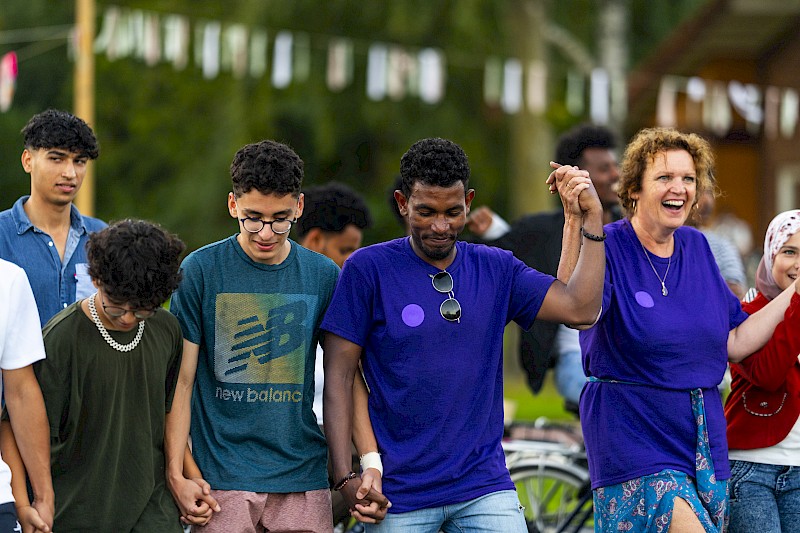
Teenagers to us are those who are older than 15. For them, the Happiness has a special approach to the methodologies of the activities. Teenagers in asylum-seeking centres are people with talent, opportunities and chances. Looking for a place in the world, to their own identity with a strong need to recognize themselves in a group and feel at home. Just as all other teenagers, they look to the future full of energy to discover the world and full of ideals to change things. The next approaches have developed from the experience the Happiness has undergone with teenagers throughout its years.

  • Let teenagers formulate their own needs and goals
  • Always approach teenagers positively, focused on opportunities and chances
  • Work in phases, start with the building of trust and gradually work towards participation in external projects
  • Work to create individual expressions and styles
  • Work with good and realistic examples
  • Work with set frequency
  • Be sound and trustworthy
  • Work towards building a group in which safety and trust is a central theme
  • Focus on a large target group, not excluding any subgroups
  • Choose a personal approach and a combination between local and national offers

Parent-child methodologies

If we want to provide a positive contribution to the lives of children in asylum-seeking centres, then we cannot avoid including parents. Children cannot be seen as separate from the family they are from and live in (even if not complete). It is invaluable for children to involve the parent. For the Happiness this means that there are large chances and also responsibilities.

Why and value

Resilience: By involving the talent of everyone in the family and build on that to create trust, it can increase the resilience of the family

Active: From some families this is literally the first opportunity to be active

Positive and pride: It is important and comforting if children see their parents working (again) on something positive. To see their parents be passionate makes children proud.

Grip: Responding to questions and needs of parents and children gives families grip on their own situation.

New and beautiful memories: By building on and undertaking positive activities. For families these values are moments to remember.

We work needs-based and thus invite parents to formulate their own ideas for projects. We ask parents to help us set up projects resulting in them becoming ‘co-owners’ of the activities. This is of invaluable importance for the feeling of dignity of the parents.


   nieuwsbrief
Meld je aan voor de nieuwsbrief.
   online doneren
Via de Online Donatiemodule kan je snel, gemakkelijk en veilig doneren, met creditcard, iDeal, Paypal, een eenmalige machtiging, en meer.

Liever geen donatie via Internet? Donateur worden kan ook via dit formulier


     Vrolijkheid